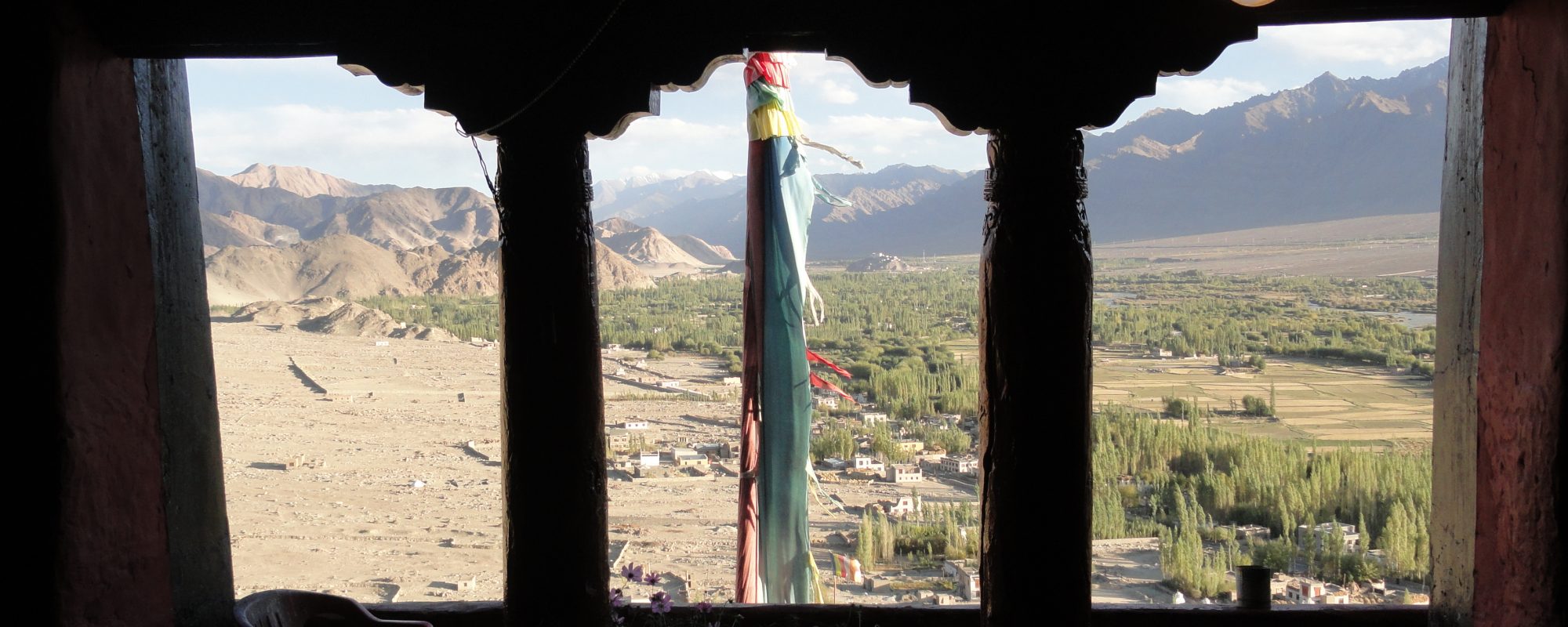
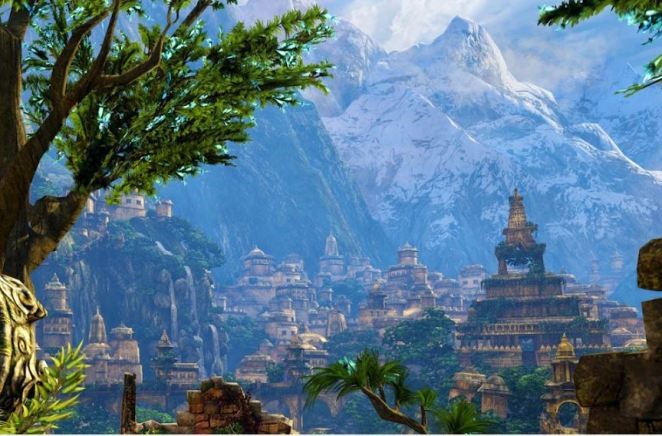
There is an ancient myth in Central Asia, and one that is now known by the many cultures who have come into contact with it, the myth of Shambhala. You may know of it by the name Shangri-La; the Russian old believers knew of it as Belovoyde; the Hindus as Aryavartha (The Land of the Noble ones, or the home of the Vedas); and the Chinese as Hsi Tien (the Western Paradise of Hsi Wang Mu); and the Kirghiz called it Janaidar. But throughout Asia, and now the West, it is best known as Shambhala, ‘the Place of Tranquility’.
Each of these traditions shares the same belief about this land- it is the home of their gods and spiritual masters, and the source of their religion. In Tibetan Buddhism and their Bon religion there are a number of other names, each having a slightly different nuance, but their meanings are all the same. Shambhala is a heavenly place, whether here on Earth or in a state of mind or of the spirit. But the word heaven has some connotations that don’t quite match our Western understanding of the term. In silk road religions heaven is an eternal state of mind, present to us all at any time.
Still, maybe Shambhala is an actual physical place. It is an ideal land hidden somewhere in the mountains, a place of peace, harmony, wisdom, and beauty. It is the ideal society. Maybe it was an ancient society, or maybe it is still in the future; maybe it is in the heavens; maybe it is hidden under the Earth (like the mythical kingdom of Agartha).
A lot of ideas have been proposed for its earthly location. The closest likely match I have found to a specific historical physical location is in the ancient city of Balkh, near Mazar-I-Sharif in northern Afghanistan (http://balkhandshambhala.blogspot.com/2013/07/shambhalapalace-of-king.html).
The city of Balkh was a fascinating place in ancient times. It was at the center of the Central Asian Silk Road world. The city of Balkh was historically known as Sham-i-bala, which means ‘elevated candle’ in the Persian language. The city was centrally located on important ancient trade routes; was surrounded by extremely fertile land; was a center of many ancient religious centers; was the home of Zoroaster and the birthplace of Zoroastrianism; was the birthplace of Jalaludin Rumi; was an important center in the development of Mahayana Buddhism and was the home of a monastery holding 3000 monks in Buddhist times; and had an octagonal fortress at its center (as Shambhala was described). The geography of ancient Balkh matches many of the descriptions of the city of Shambhala in texts. All of these factors make Balkh a good candidate for a physical location sitting at the root of a mythology of a mystical and flourishing city sitting between the physical and spiritual worlds- a thriving trade city that was also the home of countless mystical spiritual orders throughout history, located right in the heart of central Asia.
Still, there a lot of contenders. Many hidden mountain valleys have been proposed, and some in widely divergent regions. Some say it’s in the Altai range of Siberia; some say Kashmir in India; some say it’s in the Himalayas; some say it’s in the Karakul area of the Kun Lun mountains in the west of China; some say it’s near Mt Kailash in western Tibet; and others say many other things. An interesting thing about the Shambhala myth is that it flirts between Heaven and Earth- it’s often both at the same time. So what is it then?
We can look at this myth from a few angles: it’s our purified state of mind; it’s an ancient great kingdom that has been mythologized; it’s the Central Asian heaven myth; it’s a prophecy of a future Garden of Eden; or it’s the entirety of Central Asia idealized as a pure land.
Many people have gone in search of Shambhala here on Earth, convinced that it’s an actual physical place, here and now. We don’t have great physical reports of anybody actually finding it in this way, although claims do exist, but they get increasingly mystical as the traveler gets closer, so the physicality gets questionable at that point. Maybe some others found it and stayed there, so we no longer hear from them. However, I can tell you with absolute certainty that Tibetan lamas (Buddhist teachers) consider it to be nothing but a name for one’s own purified mind, and the pure land refers to the pure land that one then inhabits in their mind- a pure perception of the outer and inner worlds. This pure land has other names as well. Shambhala is the name used in the Kalachakra Tantra- a profound Tantric text and spiritual practice. Other Tantric texts use different names for what is essentially the same pure state of Being. Whatever the tradition, whatever the name, the basics are the same for all of these mythical lands- they all belong to the same mythological world and are adapted to the local cultural matrix.
There are some great books about this myth, and some fun sources online, but my favorite book on this topic is “Shambhala: The Fascinating Truth Behind the Myth of Shambhala”, by Victoria LePage. Tons of fun! Also, the balkhandshambhala blog will entertain you to no end if you poke around it. An amazing site! “Shambhala, Oasis of Light” by Andrew Thomas is a classic and is now in reprint and also well worth a read.
The most important thing about the Shambhala myth for my purposes here is to think about it as a metamyth for the Silk Road region cultures in Central Asia. In this myth we have a vision of an ideal world according to our crossroads peoples. We have an image of an idealized land that flirts between heaven and Earth, sending down teachers and instructions on a regular basis. The world is said to be ruled from there (giving rise to all kinds of fantasies). The myth reflects the integration of physicality and spirituality. The Central Asian heavens are not divorced from the world, or other worlds that we go to only after we are dead. These are activist and not-completely otherworldly heavens, the lands of Bodhisattvas, angels, Rishis, and ascended masters.
The myth of Shambhala also contains within it the concept that our very own Nature is the same as the Nature of the gods of the heavens. We are capable, through our own efforts, of rising to the same level as its residents and taking up residence there ourselves. The masters of Shambhala regularly send down instructions and teachings so that we may join them in helping to guide the world. These instructions include meditation techniques as well as philosophical teachings. These teachings are sent to members of all the various different religions without discrimination. They are disclosed to secretive groups of these various religious traditions, and there is an invisible network throughout the region and beyond. The network of groups belongs to no one tradition and to no one nation. The network is said to have been present in the most ancient past times, preceding any of the religious teachings of today. The masters are said to guide humanity’s progress from their secret land, sending out emissaries as needed.
Here’s a great discussion about the inner esoteric meaning of Shambhala according to the Kalachakra Tantra from a Theosophist, but he does a good job keeping true to the Tibetan understanding. Well worth a watch https://www.youtube.com/watch?v=HpmQuHTfzPo.
The beauty of this myth is that it is truly a trans-religious myth. It implies that all religions are unique expression of the same wisdom. It also implies that through our own efforts we are able to achieve spiritual wisdom, of a sort that unifies the spirit and the physical aspects of our being.
There was not one unique revelation of truth for all time. The gods did not create the world and then abandon us. All religions can cooperate, at least when the inner spirit of the tradition is emphasized and people don’t focus only on the outer doctrines.
Check out LePage’s book. Also, find your way to a spiritual or religious teacher who emphasizes spiritual transformation and inner wisdom rather than just superficial dogma and you will be listening to the teachings of the teachers of Shambhala. It doesn’t matter which religious tradition, they are the teachings of the masters of Shambhala. Just find one that works for you, for whatever reason.
 Shambhala Caravanserai